
On October 27, 2025, to thoroughly study and implement the guiding principles of the fourth plenary session of the 20th CPC Central Committee, and to effectively align thoughts and actions with the decisions and arrangements of the CPC Central Committee, the Center for International Cooperation and Disciplinary Innovation of Income Distribution and Public Finance (111 Center) organized a special meeting to study and interpret the guiding principles of the plenary session. Professor Zhao Ying, Deputy Director of the 111 Center, along with researchers Wan Xin, Wan Qian, Gao Sihan, Zhang Ziyao, Li Shanshan, Lin Jiada, and other related research personnel attended the meeting in a hybrid online-offline format. The meeting featured in-depth discussions on the key terms of the plenary session communique, core issues, and research directions, and systematically arranged the tasks of writing a series of theoretical articles.
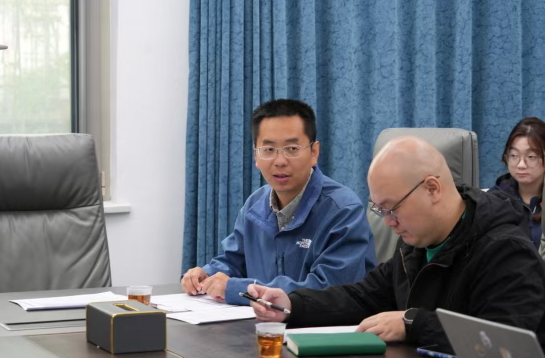
At the beginning of the meeting, Professor Zhao Ying, Deputy Director of the 111 Center, conducted a word frequency analysis and semantic interpretation of the communique of the fourth plenary session of the 20th CPC Central Committee and the fifth plenary session of the 19th CPC Central Committee from a professional perspective, identifying several main features: The first was the emphasis on a people-centered approach. "High quality" was mentioned with higher frequency, an increase of four times compared with the previous session, thus confirming the strategic assessment in the plenary session to "seek breakthroughs from the domestic demand side." Terms like "people's livelihood," "social security," and "employment" all appeared more than four times, showing an increase compared with the previous session. The communique pointed out the need to uphold the strategic foundation of expanding domestic demand, emphasizing the close combination of benefiting people's livelihood, boosting consumption, and investment in both material and human resources. This highlighted the CPC Central Committee's value orientation of "putting people first" and its deep concern for social equity and people's well-being. The second was to promote self-improvement in science and technology. This communique proposed the goal of "substantially enhancing the level of self-reliance and self-improvement in science and technology," indicating continuous growth in the importance of scientific and technological development compared with the statement of "significantly improving innovation capabilities" at the fifth plenary session of the 19th CPC Central Committee. Forming a coordinated development pattern with education and industry, it has become the core support for leading the development of new quality productive forces and shaping a new development pattern. The third was to expand effective investment. The People's Daily pointed out on October 3 that regional coordinated development has a great demand for infrastructure construction. On September 10, the report on the work of the Standing Committee of the National People's Congress proposed to expand the scale of effective investment, especially public investment in the field of people's livelihood, increase project investment that is compatible with consumption upgrading, leverage more extensive social investment, and stimulate the vitality of private investment. The fourth was to vigorously boost consumption. Consumption is one of the key driving forces for China's economic growth. According to data from the National Bureau of Statistics, in the first three quarters of this year, final consumption contributed 53.5% to economic growth and drove GDP growth by 2.8%. One crucial direction for future development is to boost consumption to cope with external uncertainties and stimulate endogenous development vitality, thereby enhancing the resilience of economic development.
Based on an accurate assessment of the guiding principles of the plenary session, the researchers, drawing on their areas of expertise, systematically proposed research ideas and implementation pathways around the key tasks outlined by the session.
Researcher Wan Xin focused on the field of people's livelihood, using the equalization of basic public services as an entry point to conduct systematic research on synergistic promotion mechanisms for employment, income distribution, and social security. Based on the plenary session's requirements to "solidly promote common prosperity" and "organically combine the strategy of expanding domestic demand with improving people's livelihood," the research provided theoretical support and policy recommendations for narrowing development gaps, enhancing people's well-being, and consolidating the foundation for common prosperity.
Researcher Wan Qian concentrated on the correlation between the quality of educational investment and social intergenerational mobility. In light of the goals of building China into a leading country in education as well as science and technology, a quantitative analysis was conducted on the efficiency of cultivating top innovative talent and its contribution rate to the development of new quality productive forces, thus serving the major task of "promoting the development of education, science and technology, and talent in a coordinated manner" put forward at the plenary session.
Researcher Lin Jiada used the relaxation of household registration restrictions as an entry point to systematically examine the mechanisms through which household registration system reforms could affect the urban-rural income gap, providing a theoretical basis for facilitating the equal exchange of urban and rural factors and advancing common prosperity.
Researcher Gao Sihan focused on the goals of urban-rural integrated development and common prosperity, and proposed to use "expanding effective investment" as the key lever to promote a virtuous development pattern in which industry and agriculture, as well as urban and rural areas, support and complement each other while centering on issues related to agriculture, rural areas, and farmers, as well as the improvement of comprehensive agricultural production capacity.
Researcher Zhang Ziyao prioritized the reform of the market economy system, proposing to start with the dual drivers of fiscal and taxation systems and financial policies, systematically analyzing their transmission mechanisms for the allocation efficiency of factor resources, and further exploring the structural role of macroeconomic governance in promoting common prosperity.
Researcher Li Shanshan used fertility subsidies as an entry point to explore policy optimization suggestions for early public service investment, responding to the plenary session's call to "solidly promote common prosperity" and serving the nation's sustainable development strategy.
The meeting emphasized that studying and interpreting the guiding principles of the plenary session is not only an academic mission but also a significant opportunity to serve national strategies and demonstrate academic responsibility. All members should firmly uphold the important principles of the "six commitments," unify problem orientation, reality orientation, and academic consciousness, and combine research expertise with the development direction of the 111 Center to produce a series of theoretical achievements that are profound, considerate, and influential.

This meeting built consensus, clarified direction, and strengthened accountability, advancing the 111 Center's research related to the study and implementation of the guiding principles of the fourth plenary session of the 20th CPC Central Committee to a substantive stage. In the future, the research team will continue to deepen theoretical exploration and actively offer advice and suggestions to provide think tank support for Chinese modernization.