
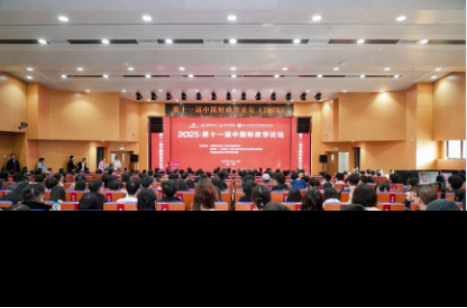
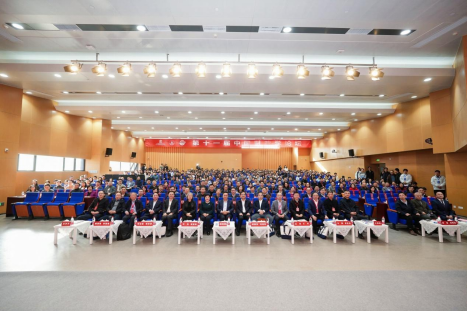
From November 29 to 30, the 11th China Public Finance Forum was held at Zhongnan University of Economics and Law (ZUEL), jointly organized by the School of Public Finance and Taxation, the Center for International Cooperation and Disciplinary Innovation of Income Distribution and Public Finance (111 Center) under the Ministry of Education and the Ministry of Human Resources and Social Security, and the Department of Scientific Research. With the theme "Fiscal Mission and Reform Pathway in the New Journey of Chinese Modernization," the Forum brought together over 400 experts, scholars, and faculty and student representatives from more than 50 universities and research institutes nationwide to jointly outline a new blueprint for fiscal and taxation reform and explore a pathway to modernization in national governance.
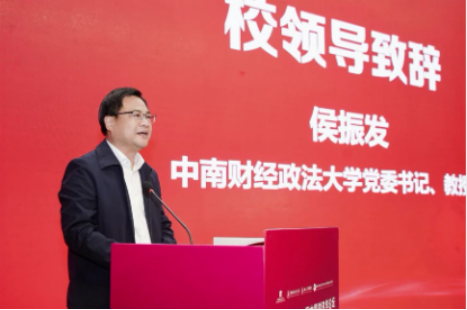
Speech by Professor Hou Zhenfa, Secretary of the CPC Committee of ZUEL
Professor Hou Zhenfa, Secretary of the CPC Committee of ZUEL, emphasized in his speech that the Fourth Plenary Session of the 20th CPC Central Committee called for accelerating the development of a high-standard socialist market economy and boosting the momentum for high-quality development. As the foundation and key pillar of national governance, public finance plays a crucial role in optimizing resource allocation, safeguarding market unity, promoting social equity, and ensuring lasting peace and stability for a country. On the new journey, fiscal scholars should dedicate themselves to studying how to establish and refine a modern fiscal system that aligns with the intrinsic requirements of Chinese modernization by maximizing the pivotal role of public finance. Mr. Hou hoped that participants would, using this Forum as a valuable platform, contribute more forward-looking, strategic, and practical insights for advancing fiscal theory and practice and make new and greater contributions to developing a fiscal theory system with distinct Chinese characteristics and style, thereby collectively promoting the flourishing development of public finance in China.
Several distinguished guests delivered speeches during the keynote speech session. These included Professor Gao Peiyong, former Vice President of the Chinese Academy of Social Sciences (CASS), Professor Fan Liming, former President of Shandong University, Professor Lyu Wei, former President of Dongbei University of Finance & Economics, Professor Yang Zhiyong, Secretary of the CPC Committee of the Chinese Academy of Fiscal Sciences, Liu Shangxi, former Secretary of the CPC Committee and Researcher of the Chinese Academy of Fiscal Sciences, Professor Liu Yi of the China Center for Finance and Taxation Research at Peking University, Professor Zhong Xiaomin, former President of Zhejiang University of Finance and Economics, and Professor Yang Canming, former President of ZUEL. Professor Wang Qiao, former Secretary of the CPC Committee of Jiangxi University of Finance and Economics, and Professor Ma Xiao, former Deputy Secretary of the CPC Committee of Southwestern University of Finance and Economics, served as the moderators for different sessions.
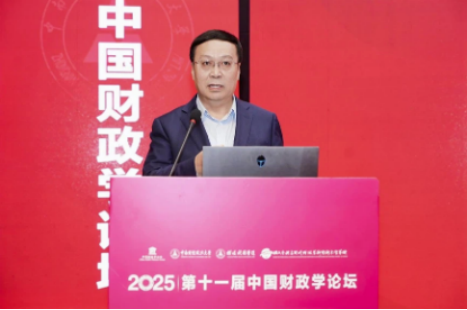
Keynote speech by Professor Gao Peiyong, former Vice President of the CASS
In his keynote speech entitled "What is the Fundamental Path to Vigorously Boost Consumption?", Professor Gao Peiyong pointed out that while the current efforts to stimulate consumption, primarily driven by fiscal policy, have achieved initial results, there remains considerable room for improvement. He offered four insights regarding the comparison of the total retail sales volume and price of consumer goods, the root cause of insufficient consumer demand, and changes in patterns of income and wealth distribution. These insights highlight that the main issue facing the current economy is the combined effect of sluggish domestic demand and weak expectations. Moving forward, it is essential to incorporate expectations into the macroeconomic analysis framework, include stabilizing and improving expectations within macro policy objectives, and optimize the redistribution system, thereby striving to meet the development goal of basically achieving socialist modernization by 2035, as set forth by the Fourth Plenary Session of the 20th CPC Central Committee.
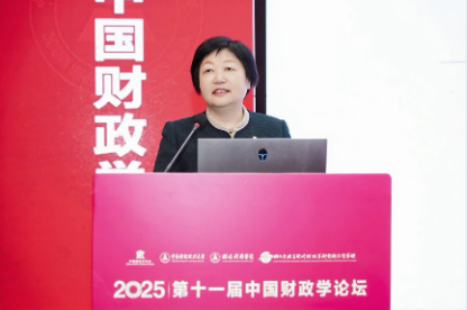
Keynote speech by Professor Fan Liming, former President of Shandong University
In her keynote speech, "Thoughts on Strengthening Fiscal Resource and Budget Coordination," Professor Fan Liming elaborated on the core concepts and advancement strategies of budget coordination from four perspectives. She pointed out that current fiscal operations face dual challenges: the imbalance between revenues and expenditures and the efficiency of fund use. She emphasized the need to achieve seamless integration of the "four budgets" as a means to optimize the allocation of fiscal resources. On the practical front, she suggested clarifying the scope of coordination, improving the regulatory framework, balancing short-term regulation with long-term sustainability, and integrating standardized management with institutional innovation, thereby consolidating the fiscal foundation for implementing national strategies and safeguarding people's livelihood.
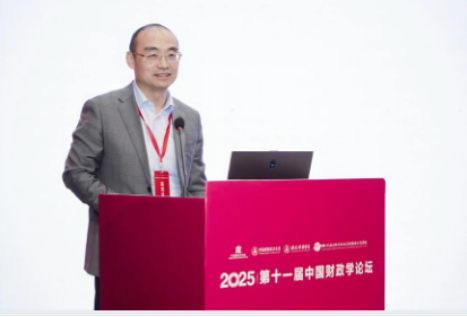
Keynote speech by Professor Lyu Wei, former President of Dongbei University of Finance & Economics
In his report "Reflections on Fiscal Sustainability and Local Autonomous Fiscal Capacity during the 15th Five-Year Plan Period," Professor Lyu Wei emphasized that coordinating central-local fiscal relations and enhancing local governments' autonomous fiscal capacity will be the major fiscal work during the 15th Five-Year Plan Period. He proposed establishing a long-term government debt management mechanism aligned with high-quality development, aiming to transform debt into a powerful instrument for advancing new quality productive forces and ensuring fiscal sustainability. He added that this will help China take the lead in achieving higher levels of modernization amid the international debt cycle.
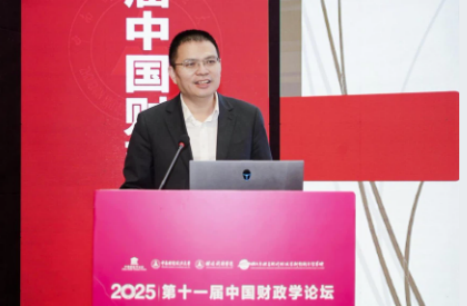
Keynote speech by Professor Yang Zhiyong, Secretary of the CPC Committee of the Chinese Academy of Fiscal Sciences
As Professor Yang Zhiyong highlighted in his speech, "Exploration of China's Independent Fiscal Knowledge System and Fiscal Reform," public finance serves as the foundation and vital pillar of national governance. However, the current public economics-oriented approach to public finance has inherent limitations, and there remains a gap between the roles expected of public finance and its actual positioning in revenue and expenditure management, asset-liability management, and fund operations. He stressed the need to establish a fiscal system suited to Chinese modernization, alongside deepening reforms of the fiscal and taxation systems, improving proactive fiscal policies, and strengthening scientific fiscal management. Subsequently, he introduced the progress of relevant pilot projects and reform initiatives.
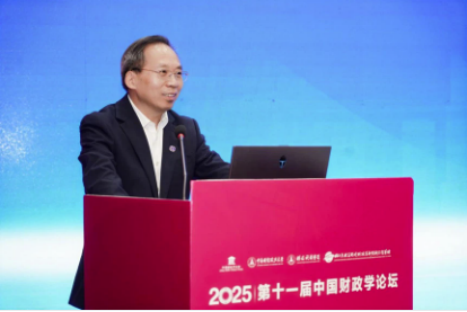
Keynote speech by Liu Shangxi, former President and Researcher of the Chinese Academy of Fiscal Sciences
Mr. Liu Shangxi gave a keynote speech entitled "How Fiscal Policy Injects Certainty into Development." He indicated that fiscal policy should transcend the traditional "non-equilibrium–equilibrium" analytical framework and adopt a new "uncertainty–certainty" paradigm, guided by "socialization of risks." He proposed the establishment of a fiscal relationship matrix integrated into national governance from three major dimensions—state-market relations, state-society relations, and central-local government relations. He explained that fiscal relations essentially represent the combination of interests and risks, and that fiscal reform involves the reconstruction and improvement of risk allocation rules.
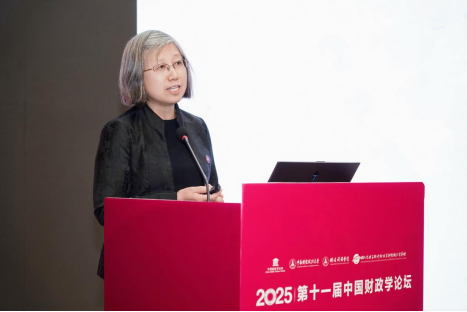
Keynote speech by Professor Liu Yi, Director of the China Center for Public Finance and Taxation Research at Peking University
In her speech, "Reflections on the Adjustment of the Tax Sharing System from Production to Consumption," Professor Liu Yi introduced that the country is pursuing tax reform by moving consumption tax collection to later stages and assigning it to local governments. She discussed whether a production-based tax system leads local governments to prioritize production over consumption, and analyzed how moving consumption tax collection to later stages could alter the distribution of the tax base. Taking the auto consumption tax as an example, she noted that moving consumption tax collection to later stages would help mitigate excessive competition within the auto sector, address fiscal imbalances between production and consumption regions, and enhance the efficiency of fiscal expenditures.
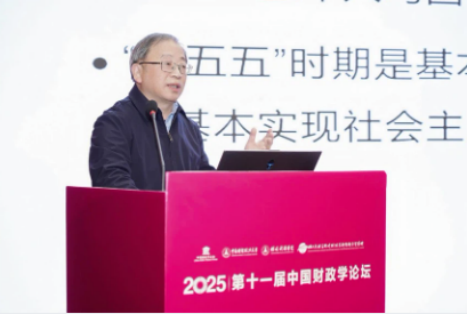
Keynote speech by Professor Zhong Xiaomin, former President of Zhejiang University of Finance and Economics
Professor Zhong Xiaomin's report, "How Fiscal Policy Can Promote High-Quality Socio-Economic Development during the 15th Five-Year Plan Period," concentrated on topics pertaining to the intergovernmental transfer payment system and mechanism. He noted that despite the continued expansion in scale and ongoing structural optimization of China's transfer payment system, advances are still needed in the alignment of fiscal powers, balanced transfer payment among regions, and incentive mechanisms. Looking ahead, priority should be given to fairness and incentive compatibility. On this basis, we should increase the proportion of general transfer payments, standardize full-cycle management for specific transfer payments, integrate high-quality development indicators such as the digital economy and green transition into allocation mechanisms, and strengthen performance evaluation and comprehensive oversight, ensuring the precise and efficient alignment of fiscal resources with development needs.
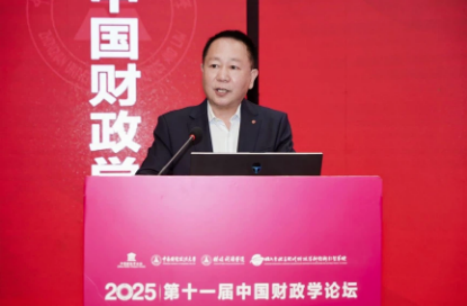
Keynote speech by Professor Yang Canming, former President of ZUEL
Professor Yang Canming addressed the topic "How to View China's Current Economic Situation." The keynote speech presented six major points: First, China's global influence continues to grow; second, economic development should focus on improving asset efficiency; third, it is necessary to invest in human capital to address shortcomings in people's livelihood and unlock consumption potential; fourth, it is important to emphasize both R&D innovation and transformed application; fifth, it is essential to advance the integration of financial power and currency strength; sixth, efforts should focus on addressing the employment challenges brought by AI and implementing conceptual and institutional innovation to guide high-quality economic development.
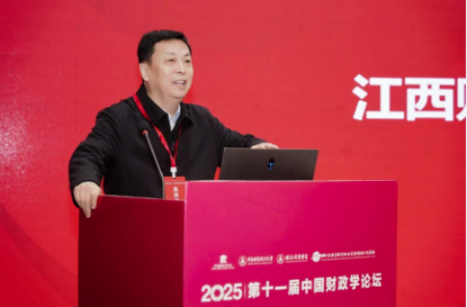
Professor Wang Qiao, former Secretary of the CPC Committee of Jiangxi University of Finance and Economics, presides over the first half of the keynote speech session.
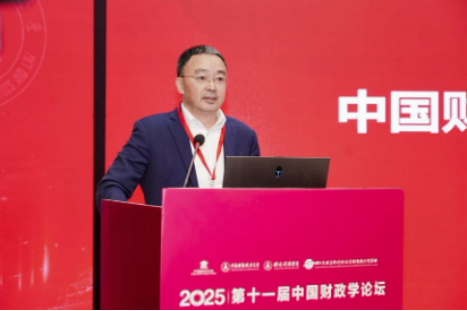
Professor Ma Xiao, former Deputy Secretary of the CPC Committee of Southwestern University of Finance and Economics, presides over the second half of the keynote speech session.
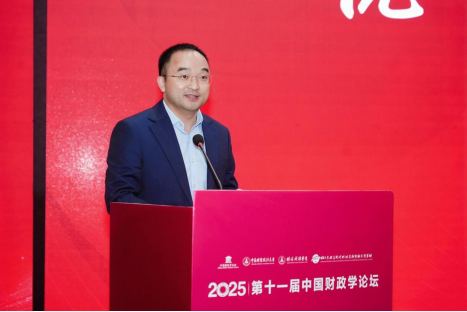
Professor Lu Yuanping, Vice Dean and Director of the Academic Affairs Office of the Undergraduate School and Dean of the School of Public Finance and Taxation at ZUEL, chairs the opening ceremony.
On the afternoon of November 29 and the morning of November 30, four roundtable forums and 13 parallel forums took place.
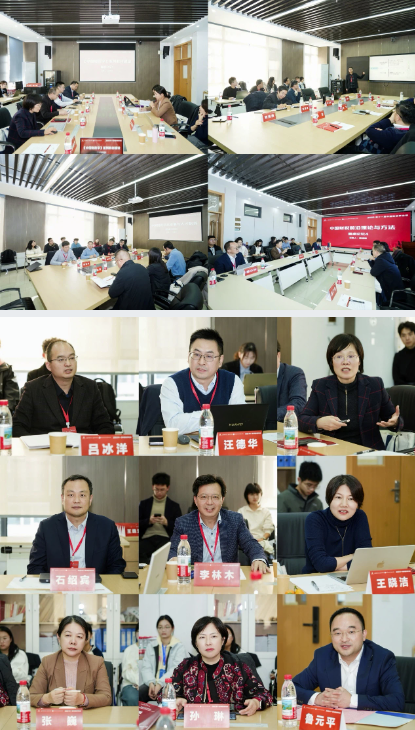
Roundtable Forum I
At the Roundtable Forum I, a group of guests discussed and exchanged views on the topic of "Development of Textbook Series for China's Public Finance." The participants included: Professor Lyu Bingyang, Executive Director of the Institute of Public Finance and Taxation, RUC, Researcher Wang Dehua, Director of the Fiscal Audit Research Office, the National Academy of Economic Strategy of the Chinese Academy of Social Sciences, Professor Cai Hongying, Secretary of the CPC Committee of the School of Finance and Public Administration, Hubei University of Economics, Professor Shi Shaobin, Executive Vice President of the School of Economics, Shandong University, Professor Li Linmu, Dean of the School of Public Finance & Taxation of GDUFE, Professor Wang Xiaojie, Dean of the School of Public Finance and Taxation of Hebei University of Economics and Business, Professor Zhang Wei, Dean of the School of Taxation, Jilin University of Finance and Economics, Professor Sun Lin, Deputy Director of the Department of Public Economics at the School of Economics, Fudan University, and Professor Lu Yuanping, Vice Dean and Director of the Academic Affairs Office of the Undergraduate School and Dean of the School of Public Finance and Taxation at ZUEL.
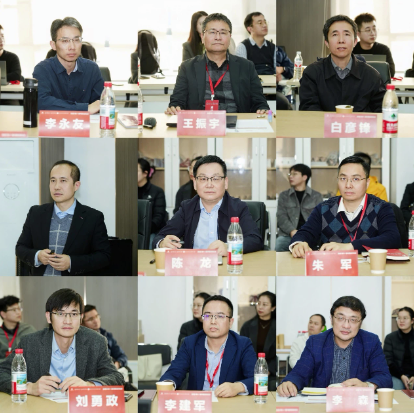
Roundtable Forum II
At the Roundtable Forum II, several guests engaged in discussions and exchanges on the topic of "China's Independent Knowledge System in Finance and Taxation." These guests were Professor Li Yongyou, former Vice President of Zhejiang University of Finance and Economics, Professor Wang Zhenyu, Dean of the Local Finance Research Institute of Liaoning University, Professor Bai Yanfeng, Director of the CUFE Institute for ESG, Professor Mao Jie of the College of Public Finance and Investment of Shanghai University of Finance and Economics, Researcher Chen Long, Director of the Journal Editing Board of Chinese Academy of Fiscal Sciences, Professor Zhu Jun, standing member of the CPC Committee and Director of the Publicity Department of Nanjing University of Finance & Economics, Professor Liu Yongzheng, Director of the Department of Public Finance at the School of Finance, Renmin University of China, Professor Li Jianjun, Dean of the School of Public Finance and Taxation of Southwestern University of Finance and Economics, and Professor Li Sen, Dean of the School of Public Finance & Taxation of Shandong University of Finance and Economics, among others.
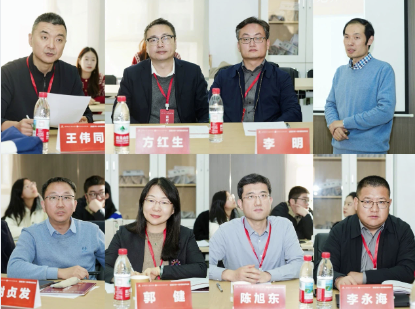
Roundtable Forum III
The Roundtable Forum III focused on discussions and exchanges on the topic of "Development of China's Finance and Taxation Discipline and Talent Cultivation." It featured guests including Professor Wang Weitong, standing member of the CPC Committee and Vice President of Dongbei University of Finance & Economics, Professor Fang Hongsheng, Director of the Institute of Public Economics and Finance of Zhejiang University, Professor Li Ming, Dean of the School of Government, University of International Business and Economics, Professor Gong Feng, Director of the Department of Public Finance and Taxation, Economics and Management School of Wuhan University, Professor Xie Zhenfa, Deputy Dean of the School of Economics, Xiamen University, Professor Guo Jian, Director of the Research Office of Shandong University of Finance and Economics, Professor Chen Xudong, Director of the Research Office of Tianjin University of Finance and Economics, and Professor Li Yonghai, Dean of the School of Finance and Taxation, Lanzhou University of Finance and Economics.
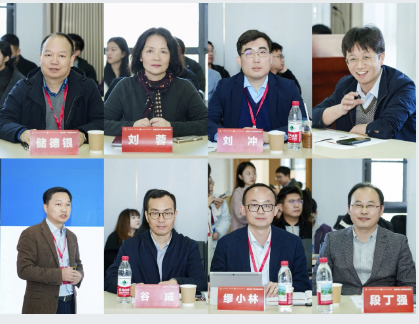
Roundtable Forum IV
The Roundtable Forum IV invited guests including Professor Chu Deyin, standing member of the CPC Committee and Vice President of Anhui University of Finance & Economics, Professor Liu Rong, Director of the Research Center for Budget Review and Supervision of Local People's Congress, Southwestern University of Finance and Economics, Associate Professor Liu Chong, Director of the Department of Finance, School of Economics, Peking University, Chen Shuangzhuan, Director and Senior Editor of the Editorial Department of Journal of Tax Research, Professor Fu Wenlin, Dean of the School of Public Finance and Taxation, ZUFE, Professor Gu Cheng, Dean of the School of Public Finance & Taxation, Dongbei University of Finance & Economics, Professor Miao Xiaolin, Dean of the School of Public Finance and Management, Yunnan University of Finance and Economics, and Professor Duan Dingqiang, Dean of the School of Economics, Wuhan Textile University. These guests conducted in-depth discussions and exchanges on the topic "Frontier Theories and Methods in China's Public Finance and Taxation."
The 13 parallel forums covered 13 topics, including government procurement and public expenditure, public services and coordinated regional development, social security and labor markets, fiscal revenue and fiscal sustainability, tax administration, tax policy and corporate behavior, tax policy and income distribution, green finance and tax and environmental governance, public debt and debt management, and state-owned assets and capital management, among others. A total of 167 presenters shared their research across these sessions.
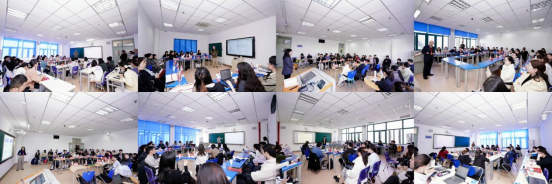
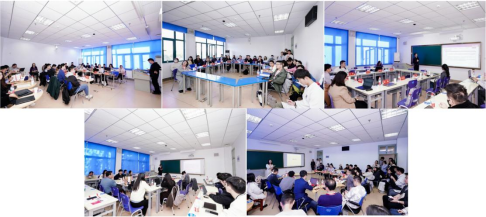
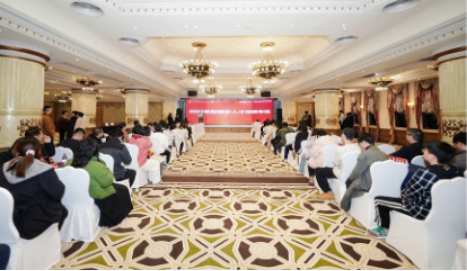
On the evening of November 29, the Talent Recruitment Fair of the 11th China Public Finance Forum was held, which was chaired by Professor Lu Yuanping. This activity invited recruitment officers from 23 universities—including Peking University, Fudan University, Xiamen University, Shandong University, Wuhan University, Xi'an Jiaotong University, and Zhejiang University—as well as numerous doctoral students. Recruitment officers delivered presentations in sequence, and participating doctoral students submitted their resumes to preferred employers and engaged in open communications.
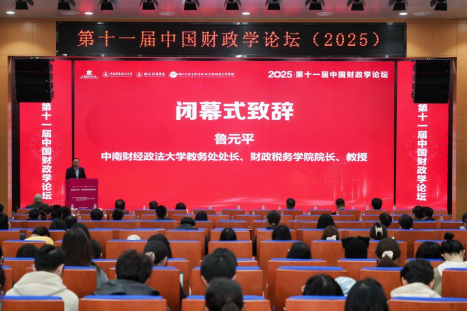
On the morning of November 30, the closing ceremony and awards ceremony were held, following the conclusion of the 13 parallel forums. Xu Jingwu, Secretary of the CPC Committee of the School of Public Finance and Taxation, ZUEL, presided over the closing ceremony. Professor Lu Yuanping delivered remarks at the closing ceremony and presided over the outstanding paper awards ceremony. The paper "Incremental VAT Revenue Sharing Incentives and Landscape of Industrial Competition among Governments—An Analysis Based on Industrial Isomorphism" by Xie Zhenfa, Wang Zhen, and Wu Deqian was awarded the first prize. The paper "Tax Revenue Forecasting Based on Machine Learning: A Case Study of VAT" by Lyu Bingyang and Xiao Naifu, and the paper "Income Targets, Flexible Tax Administration, and Year-End Tax Payments by Superstar Enterprises" by Zhong Yao, Cui Xiaoyong, Jiang Yunyun, Lu Guojun, and Zheng Kai, both received the second prize. Professor Gu Cheng, Dean of the School of Public Finance & Taxation, Dongbei University of Finance & Economics, delivered remarks on behalf of the organizing committee of the 12th China Public Finance Forum.
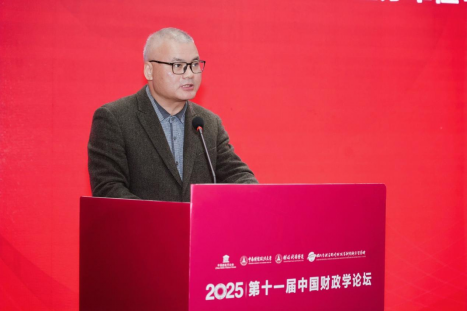
Xu Jingwu, Secretary of the CPC Committee of the School of Public Finance and Taxation, ZUEL, presides over the closing ceremony.
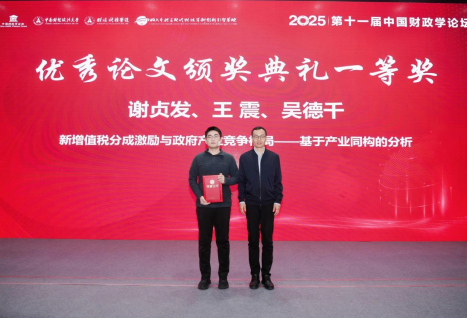
Professor Gu Cheng presents the first prize award to the recipient.
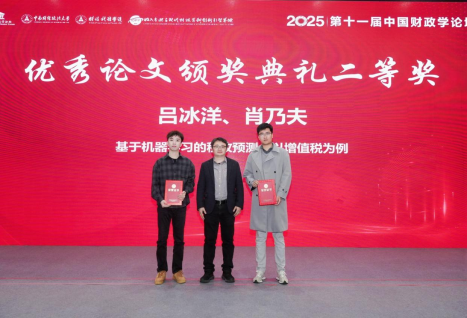
Song Wei, Director of the Economics and Management Editorial Office of The Commercial Press, presents the second prize awards to the recipients.
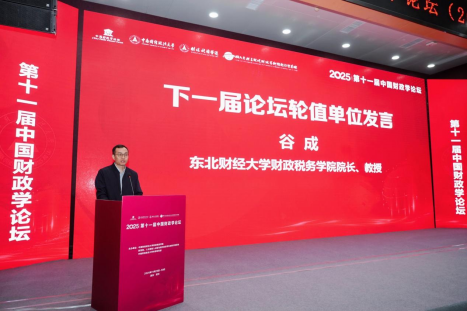
Professor Gu Cheng delivers remarks on behalf of the organizing committee of the 12th China Public Finance Forum.
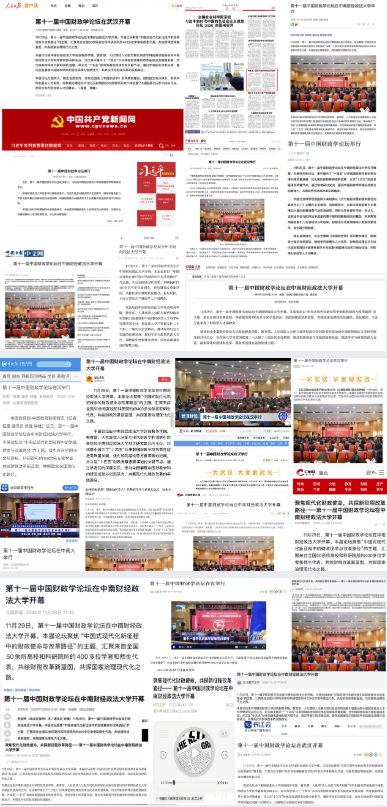
This forum has drawn widespread attention from all walks of life and the news media. According to incomplete statistics, as of press time, more than 20 media outlets had provided multi-perspective and multi-level coverage of this Forum, further enhancing its academic influence and social impact. These included central media—such as People's Daily, People's Daily Online, Economic Daily, China Daily, Science and Technology Daily, China News Service, Workers' Daily, China Youth Daily, China Education Daily, and Chinese Social Sciences Today and provincial and municipal mainstream media—including Hubei Daily, Hubei Satellite TV, HBTV-Comprehensive Channel, HBTV-Education Channel, www.chubei.com, Chutian Metropolis Daily, Changjiang Daily, Jiupai News, www.cjn.cn, WHTV, Wuhan News Radio, and WETV.
This year's edition of the event convened numerous renowned domestic scholars, creating a high-level, specialized platform for academic exchanges among fiscal scholars—especially those young and middle-aged scholars. Focusing on frontier issues in public finance and taxation and emphasizing academic innovation, the event systematically summarized China's practical experience in public finance and taxation, synthesized theoretical research findings, and helped build a shared consensus on the field's development in the academic community. In China's new journey toward modernization, ZUEL has made significant contributions to developing the discipline system, academic system, and discourse system of public finance and taxation with Chinese characteristics, as well as to advancing theoretical research and policy optimization in this field.