
[Media Platform] Taxation Research, Issue 2, 2026.
[Abstract]
Under economic globalization, wealth is increasingly mobile and allocated more efficiently across borders in pursuit of profit maximization, which improves economic efficiency and fosters wealth accumulation. At the same time, however, facilitated cross-border wealth flows have given rise to improper cross-border wealth transfers. High-net-worth individuals (HNWIs) across countries exploit offshore financial centers, investor immigration programs, and illegal wealth transfer channels to conceal wealth across the border, engage in cross-border tax avoidance, and transfer illegal proceeds. Such practices undermine orderly national wealth accumulation, exacerbate global distribution inequalities, and impede sustainable economic development and social welfare improvement. As globalization, digitalization, and financialization become increasingly intertwined, regulating the cross-border wealth flows aimed at concealing wealth, evading taxes across the border, and transferring illegal proceeds—and guiding wealth to flow and accumulate in an orderly, legitimate manner—has become a major global challenge and a prerequisite for fair income distribution and orderly wealth accumulation.
Taxation is a key government tool for adjusting income and wealth and therefore plays a crucial role in shaping cross-border wealth flows. To better harness taxation to regulate such flows and to safeguard orderly cross-border wealth flows, this paper focuses on regulating global cross-border wealth flows: it reviews typical patterns of such flows, analyzes the role of taxation and the challenges it faces, and discusses how to accelerate the development of a tax governance system conducive to their regulation.
Accelerating the Development of a Tax Governance System Conducive to Regulating Cross-Border Wealth Flows
(I) Improving tax system design to regulate cross-border wealth flows
1. Countries that have not yet adopted an expatriation tax should consider doing so to raise the cost of relocation for wealthy individuals and their wealth transfers, thereby deterring immigration and emigration aimed at cross-border tax avoidance and transfer of illegal proceeds. Firstly, governments should thoroughly justify the practical basis for implementing an expatriation tax and define its functional role. Secondly, drawing on international experience and taking account of domestic tax systems, governments should design an expatriation tax regime appropriate to national circumstances.
2. Countries should strengthen anti-tax avoidance provisions in personal income tax and property tax to curb cross-border tax avoidance by HNWIs. Many countries remain in an exploratory stage in designing such provisions; improvements can focus on three areas. Firstly, individuals should be required to comply with the arm's length principle in transactions with foreign related parties. Where transactions are deemed non-compliant, tax authorities should be empowered to make adjustments accordingly. Secondly, Controlled Foreign Company (CFC) rules should be introduced into personal income tax and property tax, with their scope extended to cover legal entities such as offshore trusts. Thirdly, catch-all anti-avoidance rules should be established to address cross-border tax avoidance comprehensively.
(II) Strengthening tax collection and management to regulate cross-border wealth flows
1. Tax collection and management methods should be optimized to address new forms of cross-border tax avoidance and transfer of illegal proceeds. On the one hand, information technology advancements should be utilized to accelerate the digitalization and intelligent upgrade of tax collection and management, enhancing tax authorities' capacity to acquire and analyze tax information. On the other hand, regulatory attention should be focused on intermediaries like tax agents and accountants that may employ various means to assist wealthy groups in cross-border tax avoidance and transfers of illegal proceeds, and oversight of their practices should be strengthened.
2. Regular information-sharing and cooperation mechanisms should be established between tax authorities and other departments. In response to increasingly complex cross-border wealth flows, sovereign states should coordinate tax, financial supervision, anti-corruption, customs and related agencies to establish regular information-sharing and cooperation mechanisms—removing legal and administrative barriers to interdepartmental information sharing and coordinated action and ensuring smooth collaboration.
(III) Deepening international tax cooperation to regulate cross-border wealth flows
1. The design of the automatic exchange of tax information (AEOI) in tax matters between countries should be further improved. Regarding the global AEOI framework: On the one hand, the scope of wealth covered by the Common Reporting Standard (CRS) and the use scope of exchanged information should be broadened. This includes incorporating tangible assets such as real estate into the AEOI scope, explicitly authorizing tax authorities to share information with other relevant departments, removing legal obstacles to information utilization, and enabling timely information sharing. On the other hand, efforts should be made to encourage major offshore financial centers to sign CRS agreements to prevent concealed cross-border wealth and illegal funds from flowing into jurisdictions that are outside the CRS standard. Furthermore, sovereign states may enter into bilateral or multilateral tax information exchange agreements (TIEAs) or bilateral tax treaties (incorporating information exchange clauses) to expand information sources on cross-border wealth, particularly concerning countries outside the CRS framework, those popular among HNWI immigrants, or those with significantly lower tax rates.
2. Discussions on the feasibility of a global minimum wealth tax should be accelerated. In his Global Tax Evasion Report 2024, Gabriel Zucman proposed a global minimum wealth tax equivalent to 2% of the wealth of the world's billionaires Commissioned by the G20, Zucman released a blueprint for implementing such a tax in June 2024, comprehensively exploring its design, potential positive impacts, challenges, and countermeasures, and urging countries worldwide to initiate intergovernmental negotiations on its feasibility promptly.
(IV) Establishing supporting systems to regulate cross-border wealth flows
1. A unified wealth declaration and registration system should be established to accelerate pilot programs for statistics on illegal financial flows. In the initial phase, the unified wealth declaration and registration system may cover simpler wealth categories such as income and savings accounts. As information systems develop and conditions mature, its scope can expand to include real estate, funds, stocks, trusts, and other broader wealth categories, progressively building a comprehensive wealth information monitoring system. At present, the United Nations' work on statistics for illegal financial flows is being piloted only in a limited number of countries, which constrains efforts to estimate and characterize the global scale and features of such flows. The list of pilot countries for illegal financial flow statistics should be expanded more rapidly to provide data support for combating these flows.
2. Regular cooperation mechanisms between countries to combat cross-border tax avoidance and the transfer of illegal proceeds should be established, and asset recovery mechanisms should be improved. Firstly, countries can establish regular cooperation mechanisms through bilateral or multilateral agreements or joint task forces to enhance the timeliness and effectiveness of actions against cross-border tax avoidance and the transfer of illegal proceeds. Secondly, when improper cross-border wealth flows have already occurred, utilizing asset recovery mechanisms to recover national losses is equally crucial for regulating such flows. Improvements to asset recovery mechanisms should focus on at least four areas: Firstly, countries should strengthen legal frameworks concerning asset recovery and prioritize coherence between domestic and foreign-related laws to provide a legal basis and a favorable rule-of-law environment for cross-border asset recovery. Secondly, countries should promote the signing of bilateral or multilateral judicial assistance treaties and extradition treaties to streamline cooperation procedures of asset recovery and enhance the efficiency of cross-border collaboration. Thirdly, countries should accelerate the discussion, negotiation, and signing of international conventions on asset recovery to provide global guidance on standards, systems, and methods. Fourthly, countries should rapidly establish and refine asset-sharing systems to increase the incentive for wealth-receiving countries to participate in international cooperation.
[About the Author]
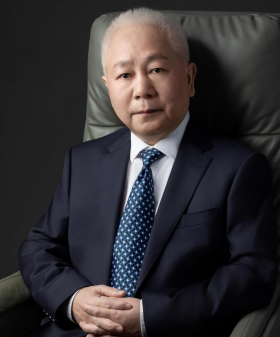
Professor Yang Canming, PhD in Economics, holds honorary doctorates from the Sapienza University of Rome in Italy and Dongseo University in the Republic of Korea. He is the former President and Deputy Secretary of the CPC Committee of Zhongnan University of Economics and Law (ZUEL). He currently serves as Director of the Center for International Cooperation and Disciplinary Innovation of Income Distribution and Public Finance (111 Center) under the Ministry of Education and the Ministry of Human Resources and Social Security of the People's Republic of China, and is a doctoral supervisor, a second-level professor, and a senior professor at the School of Public Finance and Taxation, ZUEL. Additionally, he is Vice President of the Society of Public Finance of China, Vice Chairman of China Teaching Guidance Committee for Public Finance Majors of the Ministry of Education, a discipline expert on Expert Committee on Higher Education Philosophy and Social Sciences (Marxist Theoretical Research and Construction Projects) of the National Textbook Committee, one of the leading talents in National Talent Project, "Famous Cultural Talent" awarded by the Publicity Department of the CPC Central Committee, the talent of the "Four Batches" Talent Project, Member of the 8th Applied Economics Discipline Review Group of the State Council, one of the first talents in "New Century National Hundred, Thousand and Ten Thousand Talent Project", an expert of the "Program for New Century Excellent Talents in University" of the Ministry of Education, expert of the training program of the "Cross-century Qualified Disciplinary Leaders" by the Ministry of Finance, and expert with special allowances from the State Council. His research mainly focuses on basic fiscal theories and fiscal policies. He has led more than 30 national, provincial and ministerial level projects, including the Major Program of NSSFC, Major Program of Philosophy and Social Sciences Research of the Ministry of Education, "Four Batches" Talent Project of the Publicity Department of the CPC Central Committee, Entrusted Program of the General Office of the CPC Central Committee, Program of NSSFC, Program of Fok Ying Tung Education Foundation of Ministry of Education, such as "Research for Promoting the Common Prosperity of All People", "Research on Regulating the Order of Income Distribution", "Research of Local Financial Behavior and Its Regularization", and "Research of the Chinese Government Procurement". The "Chinese Finance" edited by him was selected as the first batch of key textbooks in the "China Series·Economics". A number of his research reports have received important instructions from leaders at the provincial and ministerial levels or have been adopted by government departments. He has published more than 10 monographs and translations, including the Research on Regulating the Order of Income Distribution, Market Structure and Government Economic Behavior, and Fiscal Theory and Institutional Innovation. He has released over 160 academic papers in various important journals, including Social Sciences in China, Economic Research Journal, Journal of Management World, Finance & Trade Economics, Public Finance Research, and Economic Perspectives. More than 30 of his research results have been reproduced in Xinhua Digest and Chinese Social Science Digest, and reposted on the China Social Science Excellence platform. With his achievements, he has won over 20 important awards, including national awards (the first prize of Outstanding Scientific Research Achievements Award of Higher Education Institutions of China and the second prize of the National Teaching Achievement Award for Higher Education), provincial awards (the first prize of Excellent Achievements in Social Sciences of Hubei Province, the first prize of Development Research Award of Hubei Province, and the first prize of Outstanding Research Achievements of the CPC Hubei Provincial Committee), the first prize of the Excellent Teaching Materials of the Ministry of Finance, the Soft Science Professional Research Award of China, and the ACCA Outstanding Achievement Award. He was named the favorite president of university students.