
Recently, Professor Zhao Ying from the School of Public Finance and Taxation at Zhongnan University of Economics and Law (ZUEL) was interviewed by China Economic Times. The discussion centered on questions such as: Why has "raising residents' income" been repeatedly emphasized and deployed at various levels? Where should the focus for promoting income growth be directed and which groups should receive attention? How to ensure that multi-channel efforts to boost income are implemented with precision and deliver tangible outcomes? Professor Zhao shared his professional insights on these questions.
Why is the issue of increasing residents' income frequently raised? Zhao Ying noted that, as China moves into 2026, the economy is undergoing a fundamental shift from high-speed growth to high-quality development. The core rationale for this transition is the need for a complete transformation in the drivers of economic growth. To address global economic uncertainties, the main driver of economic growth in China has shifted from relying on investment and exports to expanding domestic demand. This transition requires residents' incomes to grow steadily and sustainably. "An increase in residents' income not only enhances their spending power, but also improves their income expectations and boosts their willingness to consume." Professor Zhao held that this transformation will compel Chinese industries to continuously upgrade and improve, facilitating a virtuous cycle within the national economy. The frequent references to raising residents' incomes reflect the governance logic of enhancing overall prosperity by more effectively distributing economic gains. This approach aims to build an "olive-shaped" social structure, with the middle-income group as the backbone, thereby ensuring the long-term, balanced development of society.
What aspects of income should be "increased" to promote higher earnings among residents? Zhao Ying stated that the process of increasing residents' income is multi-dimensional and structured. First, it is important to focus on raising residents' wage income. Enhancing income during the initial distribution phase helps increase the share of labor remuneration at the macro level and, at the micro level, strengthens and improves residents' purchasing power. Second, there should be efforts to promote growth in residents' property income. Property income for Chinese residents is primarily derived from deposit interest, but the growth of this income has consistently slowed since 2019. As a result, it is important to broaden the channels for residents' property income by promoting the optimization and stabilization of the capital market system, and by introducing products that deeply integrate wealth management with consumption. These measures would allow ordinary individuals to achieve long-term and stable returns from stock and bond markets. Third, it is necessary to strengthen the adjustment of transfer payments. For low-income and incapacitated groups, targeted increases in transfer payment income can be achieved through social security and government subsidies. Such efforts would not only contribute to narrowing the wealth gap within society, but also increase the average propensity to consume and enhance residents' capacity and willingness to spend.
How can residents' incomes be increased? Zhao Ying suggested further implementing the employment-first policy to strengthen the foundation for income growth among residents. The government should guide enterprises to create more employment opportunities and diversify channels for workers to earn income. In response to the impact of artificial intelligence on the labor market, both government and enterprises should focus on upskilling and training initiatives—aligning workers' skills with enterprise development needs, reducing job search costs for low-skilled workers, and enhancing the sustainability of their employment. In addition, deepening reforms of the tax and distribution systems would help promote the circulation of wealth. The structure of personal income tax can be further optimized by adjusting special additional deductions and amounts in a timely manner according to family composition and price levels, thereby more accurately regulating income levels. It is also important to continue strengthening the social security network to alleviate concerns about the future. For instance, measures such as promoting the continuous increase of the social insurance base, enabling instant cross-provincial settlements for medical insurance, and broadening the coverage of unemployment insurance can not only effectively boost residents' income, but also improve their income expectations. Attention should be paid to the fourth distribution based on blood ties and family affection. Yang Canming, former president and professor at ZUEL, was the first to introduce in China the concept of a fourth distribution grounded in blood ties and family affection, and he provided clear definitions of its connotation and denotation. This fourth distribution signifies a transformation from private family matters to a concern for public justice. In line with the guiding principle of "regulating wealth accumulation mechanisms" outlined in the report of the 20th National Congress of the Communist Party of China, oversight and regulation of intra-family wealth transfer can be strengthened. Additionally, from the perspective of "investing in people," a comprehensive system could be established to protect the rights of family members throughout their entire life cycle.
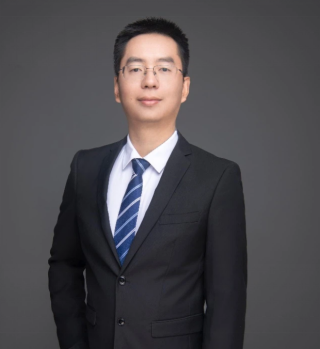
Zhao Ying is a professor and doctoral supervisor of the School of Public Finance and Taxation at ZUEL, as well as deputy director of the Center for International Cooperation and Disciplinary Innovation of Income Distribution and Public Finance (111 Center) supported by the Ministry of Education and the Ministry of Human Resources and Social Security. Mr. Zhao has been selected for the Young Top-Notch Talent Support Project of the National Ten Thousand Talents Program, Hubei Provincial Key Talent Project (two programs), the Xiangjiang Scholar Program, and the Young Scholar of the Wenlan Scholar Program. His research interests include public economics and development economics. He has published papers (including those to be published) as first author or corresponding author in Economic Research Journal (3), Journal of Management World, The Journal of World Economy, China Economic Quarterly, and Journal of Development Economics, among other journals. He has presided over more than 10 projects, including three projects of the National Natural Science Foundation of China, as well as projects of the Humanities and Social Sciences Research Program of the Ministry of Education. He has won the first prize of the Hubei Province Outstanding Research Award and the first prize of the Wuhan Social Science Achievement Award. He is an anonymous reviewer for journals such as Economic Research Journal, Journal of Management World, The Journal of World Economy, China Economic Quarterly, Journal of Development Economics, and China Economic Review. He also serves as an Academic Committee member, a correspondence review expert for projects of the National Social Science Fund of China and the National Natural Science Foundation of China, as well as a review expert for the Ministry of Science and Technology and the State Administration of Foreign Experts Affairs.