
On the morning of March 13, 2026, the 2026 Spring Work Conference of the Center for International Cooperation and Disciplinary Innovation of Income Distribution and Public Finance took place in Conference Room 119 of Wenqin Building. The conference was presided over by Professor Lu Yuanping, Executive Director of the Center. Attendees included Professor Yang Canming, Director of the Center and former President of ZUEL, along with more than ten researchers from the Center.
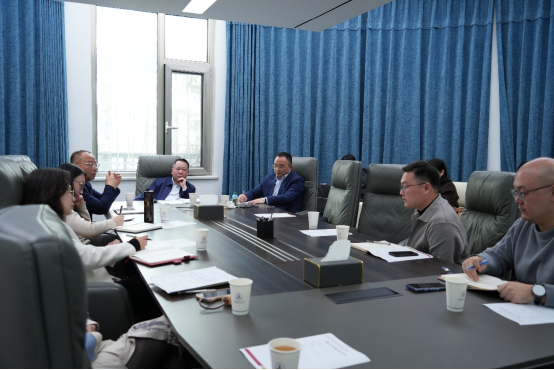
Professor Lu Yuanping opened the conference by expounding on the School’s “1+2+X” Disciplinary Strategic Map. He emphasized that resource allocation should dismantle disciplinary silos and move toward merit-based, competitive support guided by research specializations and team contributions. Furthermore, he highlighted the importance of bolstering the School’s core competitiveness through the implementation of "organized research" initiatives. Regarding talent cultivation, he announced that the 2026 curriculum plan will feature 20 new integrated courses centered on the theme of "AI + interdisciplinary studies + national strategy". These courses will be supported by professional teams dedicated to teaching and the development of instructional materials. Regarding international cooperation and institutional development, he noted that the School would deepen partnerships with prestigious universities such as Stanford. He emphasized seizing the "window of opportunity" for Sino-foreign joint education programs in 2026 and relaunching applications for international joint laboratories. Ultimately, these efforts aim to construct a Chinese-independent knowledge system for public finance and taxation.
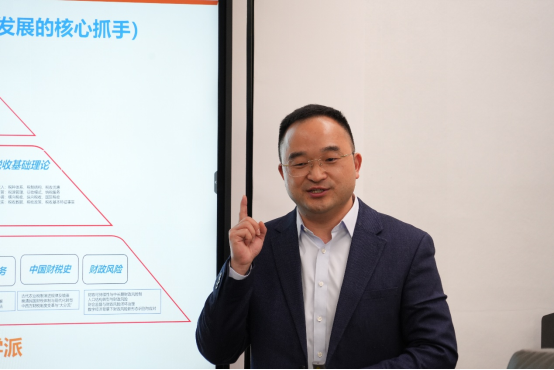
During the conference, researchers from the Center shared their insights based on their research and practical work. They engaged in active discussions on topics such as center construction, disciplinary development, teamwork, and talent cultivation. Many targeted and constructive suggestions were proposed, effectively building consensus and mobilizing strength for the subsequent high-quality development of the Center.
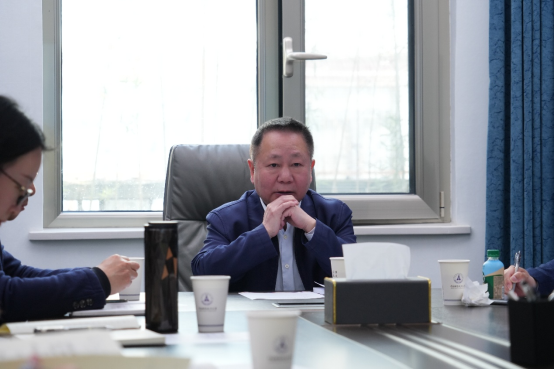
In his concluding remarks, Professor Yang Canming fully affirmed the achievements made by the Center in 2025 and expressed his gratitude to the faculty for their valuable insights and suggestions. Drawing upon the current state of the Center’s development, he outlined new goals, requirements, and measures for the next phase of key tasks:
1. Deepen international cooperation and exchange
Actively introduce high-quality global resources and broaden the scope of cooperation through educational diplomacy and academic diplomacy. Promote joint talent cultivation programs for students and comprehensively enhance the international influence of the Center.
2. Proactively align with major national strategic needs
Leveraging the platform advantages of the "111" Center, strengthen the Center's capacity for providing policy recommendations and continue to cultivate and supply interdisciplinary talents. This initiative underscores the Center’s responsibility and commitment to serving national development.
3. Build an original research and survey database
Focusing on critical stages such as questionnaire design and field implementation, solidify the foundation of data support to provide core assurance for high-quality research activities.
4. Focus on high-quality research output
Concentrate efforts on producing exemplary works, such as papers in top-tier journals and scholarly monographs. By leveraging its robust academic strength, the Center aims to attract high-level talents from both home and abroad.
5. Upgrade the talent cultivation system
Deepen the synergy and coordination with the School and strengthen academic mentorship for undergraduate students. By involving students in academic seminars and other platforms, the Center aims to identify and nurture promising talents. The Center will also continuously refine the integrated bachelor-master-doctoral training schemes to build a robust talent pipeline for the Center’s long-term development.
The successful conclusion of this conference has charted a clear roadmap for the 2026 agenda of the Center for International Cooperation and Disciplinary Innovation of Income Distribution and Public Finance. Faced with the opportunities and challenges of a new era, all members of the Center will continue to work with unity of purpose and a spirit of integrity and innovation. By maintaining steady momentum in deepening international cooperation, serving national strategies, solidifying data foundations, and nurturing top-tier talents, the Center strives to build a globally influential hub for fiscal and tax research, contributing greater "ZUEL wisdom" to the grand cause of Chinese modernization.